
Vertical transmission of Dengue: Report of a neonatal case in a high complexity center in Guayaquil, Ecuador.
DOI:
https://doi.org/10.52226/tkk51m69Keywords:
Neonatal dengue, Vertical transmission, Capillary leak, NewbornAbstract
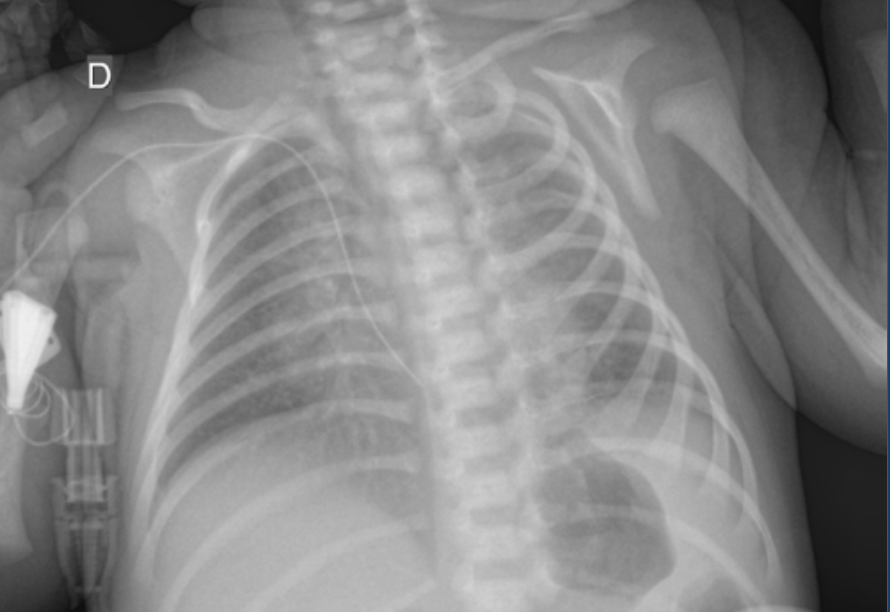
Vertical transmission of neonatal dengue presents a diagnostic challenge in hyperendemic areas such as Guayaquil. We report the case of a female neonate, the daughter of a pregnant woman who died from severe peripartum dengue. The patient was admitted with severe perinatal asphyxia, renal injury, and myocardial damage. On the fifth day, she developed fever and a rash, and the diagnosis was confirmed by a positive NS1 antigen test. During the critical phase, she developed hemoconcentration, thrombocytopenia, and pulmonary edema due to capillary leak. Grade 2 intraventricular hemorrhage was also documented. Dynamic fluid management allowed for stabilization without the need for blood products. The patient was discharged in stable condition after 14 days with multidisciplinary follow-up. Publicizing this case raises suspicion of dengue in an underreported age group; timely perinatal detection is crucial to prevent mortality associated with severe complications.
Downloads
References
1. Guzman MG, Gubler DJ, Izquierdo A, Martinez E, Halstead SB. Dengue infection. Nat Rev Dis Primers. 2016;2:16055. doi: 10.1038/nrdp.2016.55.
2. Ministerio de Salud Pública del Ecuador. Gaceta Epidemiológica de Enfermedades Transmitidas por Vectores: Dengue. Quito: MSP; 2024. SE 52. Disponible en: https://www.salud.gob.ec/gacetas-vectoriales-2024/.
3. World Health Organization. Dengue: guidelines for diagnosis, treatment, prevention and control. New edition. Geneva: WHO; 2009. Disponible en: https://www.who.int/publications/i/item/9789241547871.
4. Glasner DR, Ratnasiri K, Puerta-Guardo H, Espinosa DA, Beatty PR, Harris E. Dengue virus NS1 cytokine-independent vascular leak is dependent on endothelial glycocalyx components. PLoS Pathog. 2017;13(11):e1006673. doi: 10.1371/journal.ppat.1006673.
5. Gebo C, Hardy CSC, McElvany BD, Graham NR, Lu JQ, Moradpour S, et al. B cell receptor dependent enhancement of dengue virus infection. PLoS Pathog. 2024;20(10):e1012683. doi: 10.1371/journal.ppat.1012683.
6. Arragain L, Dupont-Rouzeyrol M, O'Connor O, Sigur N, Grangeon JP, Huguon E, et al. Vertical Transmission of Dengue Virus in the Peripartum Period and Viral Kinetics in Newborns and Breast Milk: New Data. J Pediatric Infect Dis Soc. 2017;6(4):324-331. doi: 10.1093/jpids/piw058.
7. Arteaga-Livias K, Bonilla-Crispin A, Panduro-Correa V, Martínez-Enríquez C, Dámaso-Mata B. Dengue en un neonato. Rev Chilena Infectol. 2017;34(5):494-498. doi: 10.4067/S0716-10182017000500494.
8. Paixão ES, Teixeira MG, Costa MDC, Rodrigues LC. Dengue during pregnancy and adverse fetal outcomes: a systematic review and meta-analysis. Lancet Infect Dis. 2016;16(7):857-865. doi: 10.1016/S1473-3099(16)00088-8.
9. Organización Panamericana de la Salud. Síntesis de evidencia: Directrices para el diagnóstico y el tratamiento del dengue, el chikunguña y el zika en la Región de las Américas. Rev Panam Salud Publica. 2022;46:e82. doi: 10.26633/RPSP.2022.82.
10. Machado CR, Machado ES, Rohloff RD, Azevedo M, Campos DP, de Oliveira RB, et al. Is pregnancy associated with severe dengue? A review of data from the Rio de Janeiro surveillance information system. PLoS Negl Trop Dis. 2013;7(5):e2217. doi: 10.1371/journal.pntd.0002217.
Downloads
Published
Issue
Section
License
Copyright (c) 2026 Andrés González, Joyce Andrade, Mildred Zambrano, Juan Chang

This work is licensed under a Creative Commons Attribution-NonCommercial-ShareAlike 4.0 International License.